Posted by
The Bear Safety Team
on
August 25, 2026
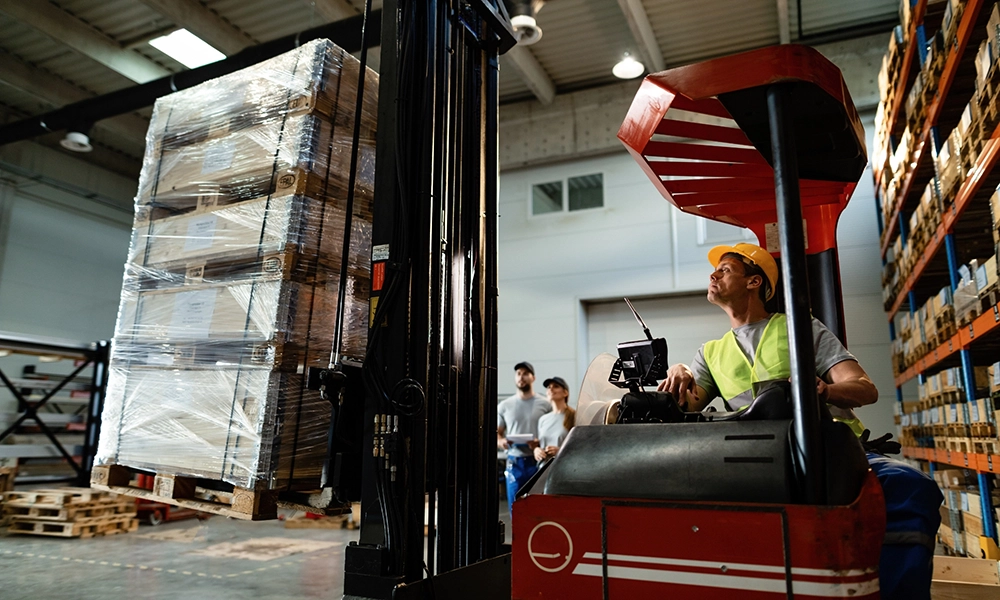
Forklifts, delivery vehicles, mobile plant and pedestrians often need to operate in the same workplace. In a busy warehouse or manufacturing site, their routes may cross at aisle ends, loading bays, doorways and production areas. A plan that looks clear on paper can quickly become less effective when stock moves, layouts change or temporary work blocks a normal route.
Workplace traffic management is therefore not a one-off exercise. It is an ongoing process of designing routes, controlling movement, communicating rules and reviewing whether the controls still work in practice. The objective is not simply to add more signs. It is to organise the workplace so that predictable movements are easy and unsafe shortcuts are less likely.
A workplace traffic management plan should consider everyone who uses the site, including employees, contractors, visiting drivers and members of the public. It should cover vehicle and pedestrian routes, entrances and exits, parking, loading and unloading, reversing, speed control, crossings, visibility, lighting, training, supervision and emergency arrangements.
The Health and Safety Executive (HSE) states that workplaces must be organised so pedestrians and vehicles can circulate safely. Its guidance recommends separating roadways and footpaths whenever possible. This is the starting point for a robust plan: remove or reduce the interaction before relying on people to react to a warning.
Map real movements, not just intended routes
Walk the site during normal operations and at peak times. Observe where forklifts travel, where pedestrians actually walk and where drivers wait, turn or reverse. Include shift changes, deliveries, maintenance work and temporary storage. Near misses and informal shortcuts often reveal conflicts that a site drawing misses.
Separate pedestrians and vehicles wherever reasonably practicable
Use dedicated footpaths, barriers, guard rails and separate access points where the layout permits. Routes should be wide enough for their users and protected from encroachment. Separation is especially important near loading areas, vehicle entrances, blind corners and doors that open towards traffic routes.
Reduce crossing points
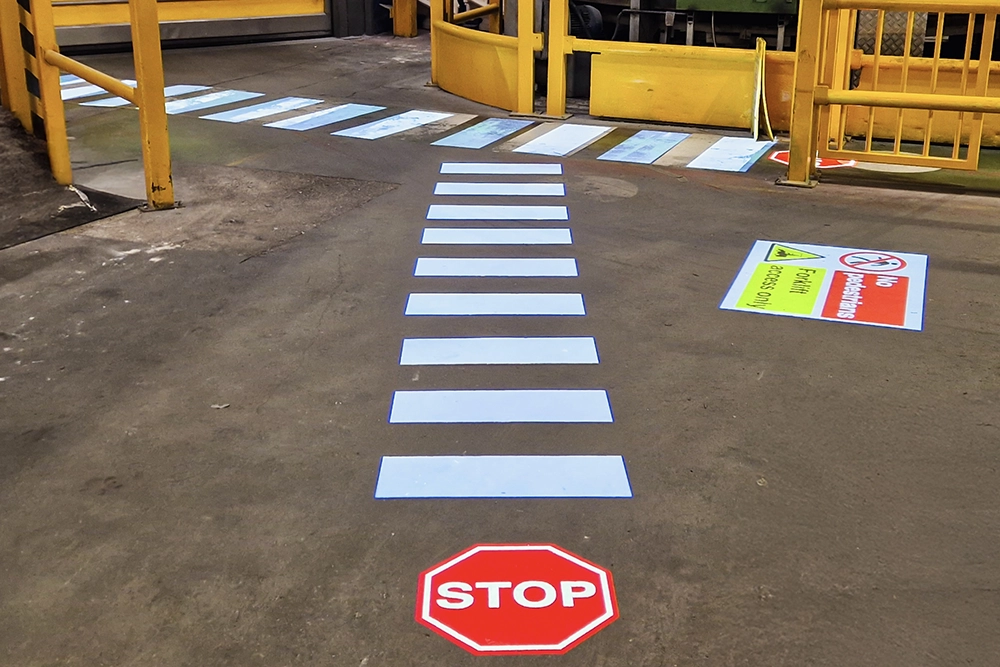
Every crossing creates a place where two movement patterns meet. Position crossings where sight lines are good and vehicle speeds are controlled. Avoid placing them immediately beside doorways, corners or racking that can hide an approaching forklift. Where a crossing is necessary, make its priority and boundaries easy to understand.
Design out unnecessary reversing
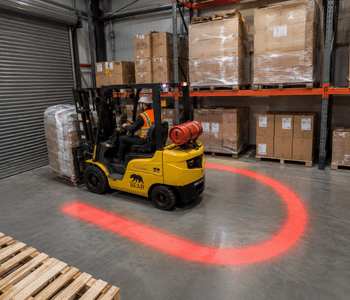
One-way systems, drive-through loading positions and turning areas can reduce the need to reverse. Where reversing cannot be avoided, keep the manoeuvre controlled and away from pedestrians. Suitable aids may include mirrors, cameras, sensors, alarms, warning lights or a trained signaller, depending on the risk assessment.
Control speed through layout and site rules
A posted speed limit is useful only when the environment supports it. Consider narrow approach lanes, clearly defined junctions, stop points and other suitable controls. Supervision and consistent enforcement matter. Drivers should know the routes, priorities and speed expectations before operating on site.
Improve visibility at blind areas
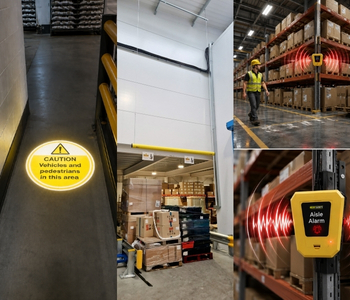
Check aisle ends, racking intersections, doorways, ramps and vehicle exits from both the pedestrian's and driver's viewpoint. Remove stored materials that block sight lines. Improve lighting and use suitable mirrors or visibility aids. At locations where neither party can see the other early enough, a detection-triggered warning can provide additional notice.
Make routes and warnings easy to interpret
Use consistent colours, signs and markings across the site. Warnings should tell the user what the hazard is or what action is expected. Too many competing messages can make the important instruction harder to recognise. Replace damaged, faded or obscured markings promptly.
Give special attention to doorways and loading areas
Pedestrians can step through a personnel door or emerge from behind a curtain with little view of the route beyond. Loading and unloading areas also bring people close to moving vehicles while attention is divided. Consider barriers, protected waiting areas, controlled access and active warnings where movement cannot be fully separated.
Brief employees, contractors and visiting drivers
A safe layout will not help if users do not understand it. Site inductions should cover permitted routes, crossings, speed limits, parking, reversing arrangements and reporting. Use maps or photographs where helpful. Visitors should know where to wait and who to contact rather than navigating an unfamiliar yard alone.
Review the plan whenever the workplace changes
Review traffic arrangements after near misses, incidents, complaints or changes to equipment, racking, doors, production flow or staffing. Seasonal peaks and construction work can also change risk. Confirm that controls are still visible, maintained and being followed, rather than assuming the original plan remains suitable.
Vehicle warning systems can strengthen awareness at specific conflict points. Examples include audible and visual aisle alarms, projected warning signs, forklift halo lights, doorway alerts and sensor-activated crossings. The right system depends on the environment, the direction of travel, ambient light and noise, the people at risk and the action the warning should prompt.
These systems should complement more fundamental controls. A flashing light or floor projection does not replace a barrier where physical segregation is reasonably practicable. Equally, a warning should not be expected to correct a route that forces pedestrians into a driver's blind spot. Start with the layout, then use technology to address the remaining risk.
Effective workplace traffic management is visible in everyday behaviour. Routes remain clear, pedestrians use protected paths, drivers approach crossings cautiously and everyone understands what a warning means. Achieving this requires input from the people who use the area, not only those who designed the plan.
Ask operators and pedestrians where they feel least visible, where congestion builds and which warnings they notice. Test proposed controls during real operating conditions. A practical plan that accounts for human behaviour is more likely to remain effective than one based only on ideal movement.
Need help reviewing forklift and pedestrian conflict points? Bear Safety can assess your site and recommend suitable visual or automated warning solutions to support your wider traffic management plan.
Proactive Safety Solutions for reducing risk in industrial environments.

Proactive Safety Solutions for reducing risk in industrial environments